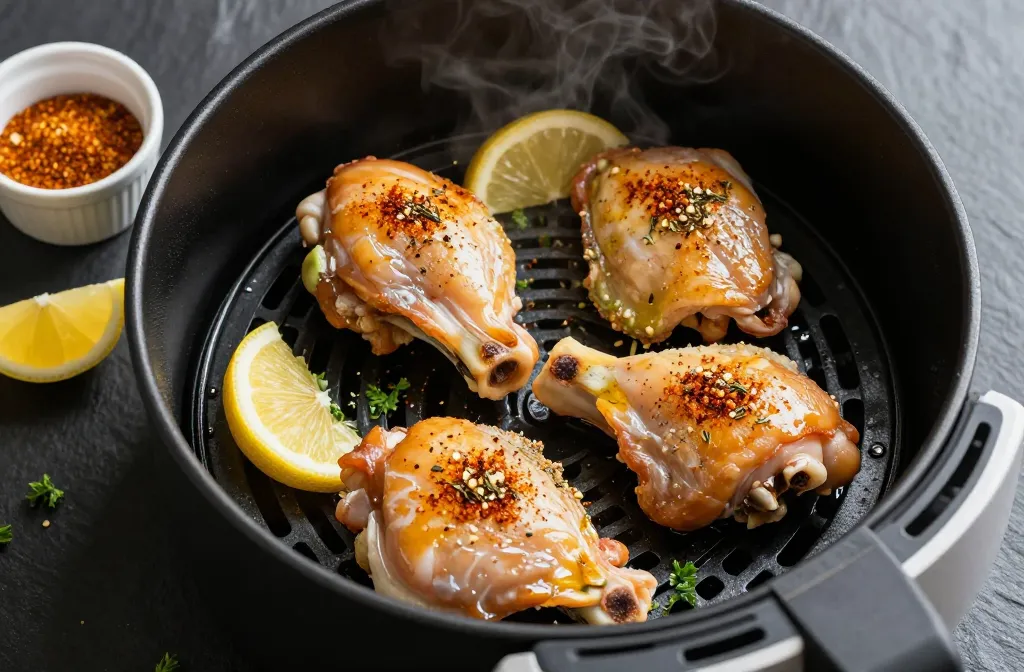
Boneless skinless chicken thighs cook in 20 minutes in the air fryer and arrive at the plate with a spice-crusted exterior and a juicy interior — no marinade, no basting, no babysitting. The circulating heat at 400°F drives Maillard browning across the surface while the thigh’s natural intramuscular fat protects the interior from drying out, even without skin as a buffer. Below: timing by thigh size, the single prep step that determines whether you get browning or steam, and five seasoning variations that keep this in rotation all week.

Weeknight Hero Air Fryer Keto Boneless Skinless Chicken Thighs
Ingredients
Method
- Mix all spices together.
- Preheat the air fryer to 400°F (200°C) for 3–5 minutes.
- Pat thighs completely dry with paper towels. Toss with oil and all seasonings until evenly coated.
- Arrange in a single layer in the basket. Air fry for 8–10 minutes, flip, then cook a further 6–8 minutes.
- Pull when the thickest part reaches 165°F on an instant-read thermometer. Rest 3 minutes, then finish with a squeeze of lemon and chopped parsley.
Notes
Why This Recipe Works
Every step has a specific mechanical reason. Understanding them is the difference between consistent browning and a result that varies every time.
- Intramuscular fat acts as a moisture buffer. Boneless skinless thighs carry significantly more fat within the muscle fibres than breast meat. At 400°F, that fat renders slowly and keeps the interior moist even if you run 2–3 minutes long. Breast meat has no such buffer — timing errors are immediately punished.
- A dry surface is the prerequisite for browning. Surface moisture converts to steam the moment it contacts the hot circulating air. Steam prevents the surface temperature from exceeding 100°C (212°F) — well below the 140–165°C (280–330°F) range needed to initiate Maillard browning. Pat the thighs completely dry and you remove this barrier entirely.
- 400°F is the correct temperature for boneless cuts. High enough to drive browning on the exterior before the interior overcooks; lower temperatures extend cook time and allow moisture to escape gradually, producing a grey, steamed result rather than a browned crust.
- A preheated basket initiates the crust immediately. Placing thighs into a cold basket means the first phase of cooking is spent raising the surface temperature rather than browning the meat. A 3–5 minute preheat at cook temperature means browning begins the moment the thigh contacts the grate.
- A three-minute rest is not optional. Heat drives moisture toward the centre during cooking. Cutting immediately releases the juices pooled near the surface — they run onto the board, not back into the meat. Three minutes of carryover rest redistributes them through the muscle fibres.
The one step most recipes skip: Preheat the air fryer basket for 3–5 minutes before loading the chicken. A cold basket loaded with any surface moisture on the meat produces steam before browning has a chance to begin — and you cannot recover from that mid-cook.
Which Chicken Cut Is Right for You?
The method stays the same across all four options. The cut determines timing, fat content, and the texture of the result.
| Cut | Best For | Cook Time | Difficulty |
|---|---|---|---|
| Boneless, skinless thigh | Weeknight speed, portion control, meal prep slicing — this recipe | 14–18 min | Beginner |
| Bone-in, skin-on thigh | Maximum flavour, crispiest exterior — the benchmark result | 22–25 min | Beginner |
| Boneless, skin-on thigh | Crackly skin with a faster cook than bone-in | 16–18 min | Beginner |
| Chicken breast | Lowest fat macro; cold slicing for salads | 18–22 min | Intermediate |
Start here — boneless skinless thighs. The fat content compensates for minor timing errors, there is no skin management or bone to work around, and the result is the most consistent of the four cuts in the air fryer. Once the technique is calibrated to your model, the bone-in version is the natural next step.
Timing Guide by Thigh Size
| Size | Weight per Piece | Temp | Total Time | Flip At |
|---|---|---|---|---|
| Small | 85–115g (3–4 oz) | 400°F / 200°C | 12–14 min | 6 min |
| Medium | 140–170g (5–6 oz) | 400°F / 200°C | 14–16 min | 7–8 min |
| Large | 200–225g (7–8 oz) | 400°F / 200°C | 16–18 min | 8–9 min |
| Thick / Uneven | Any | 400°F / 200°C | Pound to even thickness first | At halfway |
Always verify with a thermometer: Air fryer models vary by up to 15% in actual output temperature. Internal temperature — 165°F (74°C) in the thickest part of the meat, not in a thin edge — is the only reliable reference point. Treat the timing above as a calibration guide for your first cook, then adjust from there.
The Key Technique Checklist
In order of impact. The first two steps determine the majority of the result.
- Pat every surface completely dry — including the underside. Use two or three sheets of paper towel per thigh and press firmly across all surfaces. Any visible moisture on the meat delays browning. Run your finger across the surface: if it drags without slipping, it is dry enough to season.
- Preheat the basket at 400°F for 3–5 minutes before loading. A cold basket means the first phase of cooking is spent raising surface temperature rather than browning. This step is consistently skipped and accounts for the majority of pale, steamed results. It takes five minutes and makes a measurable difference every time.
- Single layer, at least 1cm of space between each thigh. Pieces in contact create a localised steam zone where circulating air cannot reach. That contact point stays grey. If four thighs do not fit with clearance between them, cook in two batches — the second batch benefits from the residual heat in the basket.
- Flip at the halfway mark, no earlier. The underside receives conducted heat from the grate; the top receives convected air. Flipping at 7–9 minutes equalises browning across both surfaces. Opening the basket early drops internal temperature and interrupts the cook.
- Pull at exactly 165°F in the thickest part. Not 170°F, not 175°F. Every degree above target accelerates moisture loss — even in thighs. Use an instant-read thermometer in the thickest point of the flesh, positioned horizontally rather than angled down into a thin edge where it will read falsely high.
- Rest 3 minutes before cutting. Carryover cooking raises internal temperature a further 3–5°F during rest. Cut before resting and the juices, under pressure from heat, escape onto the board. Three minutes is the minimum; five is better if you have it.
The difference between a thigh that’s golden and one that’s pale comes down almost entirely to whether you dried the surface first. I keep paper towels sitting next to the air fryer as a physical reminder — it is that easy to skip and that consequential not to.
Five Seasoning Variations — Same Method, Different Profile
The base technique does not change across any of these. Same temperature, same timing, same prep. Only the spice blend changes.
Lemon Pepper
Lemon zest, cracked black pepper, garlic powder, and kosher salt. Add a second hit of lemon zest after cooking, not before — heat dulls citrus aromatics. Best for: meal prep slicing over salads and grain-free bowls.
1g Net Carbs Best for: lighter weeknight dinnerBuffalo
Cook with the base rub. Immediately after pulling from the basket, toss in 2 tbsp melted butter combined with 2 tbsp hot sauce. The residual heat from the thighs emulsifies the sauce on contact — toss while still hot or the butter separates.
1.5g Net Carbs Best for: game day, wing substitutionTaco Spice
Chili powder, cumin, smoked paprika, dried oregano, and a squeeze of fresh lime after cooking. Do not add lime juice to the raw rub — acid applied before cooking draws moisture from the surface. Slice and serve in lettuce cups with avocado.
1g Net Carbs Best for: bowls and lettuce wrapsItalian Herb
Dried basil, oregano, garlic powder, and a finish of finely grated Parmesan added in the last 2 minutes of cooking. The Parmesan firms into a thin crust on the surface as it browns. Best for: zoodle and cauliflower rice pairings.
1.5g Net Carbs Best for: Italian-style plateNashville Hot (Keto)
Base rub with extra cayenne. After cooking, drizzle with a spiced butter: 2 tbsp melted butter, 1 tsp cayenne, 0.5 tsp smoked paprika, 0.25 tsp garlic powder. No flour, no sugar. Serve with sliced dill pickles.
1g Net Carbs Best for: heat seekers, pickle garnishSpice freshness matters more than most cooks realise: Smoked paprika and chili powder oxidise quickly once opened. If a spice has been in your cupboard for more than 6 months and does not release a strong aroma when pinched, it will contribute colour but very little flavour. Buy small quantities and replace regularly.
What to Serve With This
The thigh’s fat content and bold spice rub want sides that hold their own — neutral bases that carry the drippings, or bitter greens that cut through the richness.
- Cauliflower mash with basket drippings pan sauce: Deglaze the air fryer basket insert with 2 tbsp chicken stock immediately after cooking. The spice-infused drippings make a fast, flavour-loaded sauce. The cauliflower mash absorbs it without adding carbs. Total additional net carbs: approximately 2g per serving.
- Sautéed greens (kale, spinach, or Swiss chard): The bitterness of dark leafy greens provides direct contrast to the fat and spice of the thighs. Wilted in a pan with garlic and olive oil, done in under 5 minutes — finished before the chicken is off the rest timer.
- Air fryer broccoli or asparagus: Cook at 380°F for 8 minutes while the chicken rests. The timing aligns if you batch the chicken first, rest it tented loosely, and cook the vegetables in the residual-heat basket. No additional preheat needed.
Keto macro note: One thigh (270 cal / 28g protein / 16g fat / 1g net carbs) paired with 200g cauliflower mash and 100g sautéed greens totals approximately 355 calories, 31g protein, 19g fat, and 3g net carbs — a complete keto dinner within standard daily targets on most protocols.
Meal Prep and Storage
- Double batch: The air fryer basket fits 4 medium thighs comfortably with space. For 8, cook in two batches. Total active time is under 40 minutes. The second batch benefits from the residual heat in the basket — it typically runs 1–2 minutes faster.
- Cool on a rack before sealing. Placing hot thighs directly into an airtight container traps steam, which softens the spice crust during storage and cannot be reversed. Cool completely on a wire rack first — 15 minutes at room temperature is enough.
- Refrigerator: Airtight container, up to 4 days. The spice crust firms further overnight. Slice cold directly over salads — the thigh reads differently cold and does not need reheating for a quick lunch application.
- Freezer: Up to 2 months. Freeze flat on a lined baking sheet first, then transfer to a sealed bag. Thaw overnight in the refrigerator — do not thaw at room temperature or the exterior texture degrades before the centre warms through.
- Reheat at 350°F (175°C) for 3–4 minutes, uncovered. The air fryer restores the exterior texture in a way that a microwave cannot. Do not cover — trapped steam is the primary reason reheated chicken arrives soft rather than firm. Check at 3 minutes to avoid overcooking small thighs.
Troubleshooting
FAQ
No — brining is optional for thighs, not mandatory as it is for breast. The higher intramuscular fat content acts as a natural moisture buffer during cooking. A 30-minute dry brine (kosher salt applied to the surface, uncovered in the refrigerator) improves both browning and flavour depth if you have the time, but the recipe produces a reliable result without it.
Not recommended. Frozen thighs release significant surface moisture as they thaw during the cook — that moisture converts to steam and prevents the browning you need. Thaw overnight in the refrigerator and pat completely dry before cooking. The result is consistently better than any frozen shortcut, and the time investment is passive.
165°F is the USDA safe minimum, not the optimal target. Thighs contain collagen-rich connective tissue that begins converting to gelatin around 165–170°F, adding richness and tenderness. For boneless skinless thighs, pulling at 165–170°F delivers the best balance of safety, texture, and moisture. Above 175°F, moisture loss accelerates — even in thighs.
Yes, with one non-negotiable adjustment: pat the thighs completely dry after marinating and before cooking. A wet surface from the marinade steams rather than sears. Marinate for 30 minutes to overnight, drain, pat dry with paper towels, and proceed exactly as the recipe directs. The marinade contributes flavour; the dry surface makes the cook work.
Yes — basket-style air fryers circulate heat more efficiently than oven-style units and tend to run hotter than their stated temperature. If you are using an oven-style unit, add 2–3 minutes to the stated cook time and always verify with a thermometer. The technique is identical; the calibration differs by model.
Your Next Recipe
Crispy Air Fryer Keto Chicken Thighs — bone-in, skin-on — the same cut with the same core technique, but the addition of skin introduces a different set of variables: subcutaneous fat rendering, skin-to-grate contact, and a longer window that rewards patience over speed.
Cook both versions in the same week. The boneless technique you have now makes the bone-in result immediately legible — you will recognise exactly what the skin management step is compensating for and why the higher internal temperature target applies to that cut and not this one.
Boneless skinless thighs occupy a strange position in the keto kitchen — undersold because they lack the visual drama of crackly skin, passed over because they seem too simple to be worth the effort. But the absence of skin is not a limitation. At 400°F in a preheated basket with a completely dry surface, the spice rub forms its own crust. The Maillard reaction does not need skin to do its job. The technique was always the point — and it works here exactly as well as it does on any other cut.
Which seasoning variation did you run with — and did you dry-brine first or cook straight from the rub? The overnight refrigerator result is noticeably different; would be useful to hear what others are finding.
More Keto Air Fryer Chicken Recipes
Printable Recipe Card
Want just the essential recipe details without scrolling through the article? Get our printable recipe card with just the ingredients and instructions.