Chimichurri – A Bright, Herb-Packed Sauce for Almost Everything
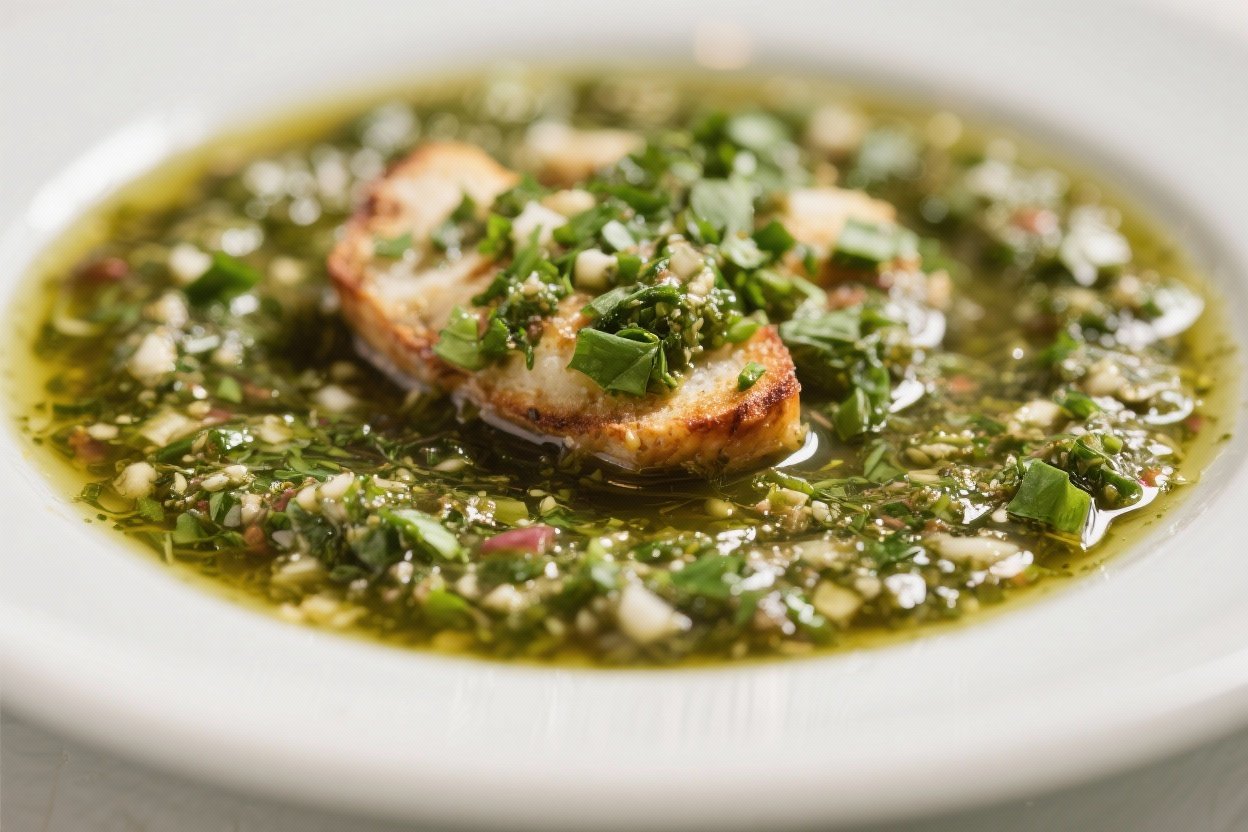
Chimichurri is the kind of sauce that wakes up a plate. It’s fresh, punchy, and loaded with herbs, garlic, and a little heat. You can spoon it over steak, chicken, grilled vegetables, or even swirl it into yogurt for a quick dip.
It takes about 10 minutes to make, no cooking required, and tastes even better after a short rest. If you like bold flavors and simple prep, this is your new go-to condiment.
Why This Recipe Works
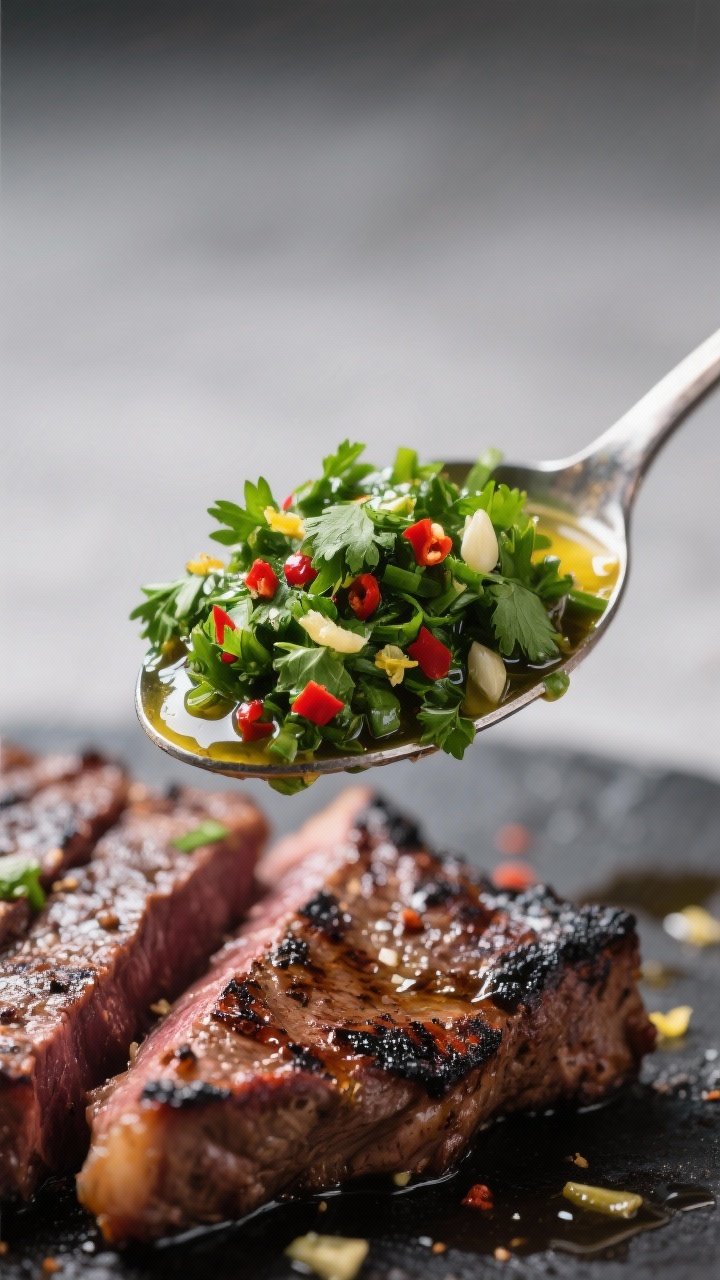
This version keeps the classic Argentine balance: bright herbs, good acidity, and enough oil to carry flavor without feeling heavy. Fresh parsley is the backbone; cilantro adds depth without overpowering.
A mix of red wine vinegar and lemon gives a clean, rounded tang. Minced garlic, chili flakes, and a pinch of oregano layer in warmth and aroma. The texture is intentionally loose and spoonable, so it coats food instead of clumping.
Shopping List
- Flat-leaf parsley (1 large bunch)
- Cilantro (small bunch; optional but recommended)
- Garlic (3–4 cloves)
- Red wine vinegar
- Fresh lemon (for juice and a little zest)
- Extra-virgin olive oil
- Red pepper flakes (or a fresh red chili)
- Dried oregano (or fresh, finely chopped)
- Kosher salt
- Black pepper
- Optional add-ins: shallot, green onion, a pinch of smoked paprika
How to Make It
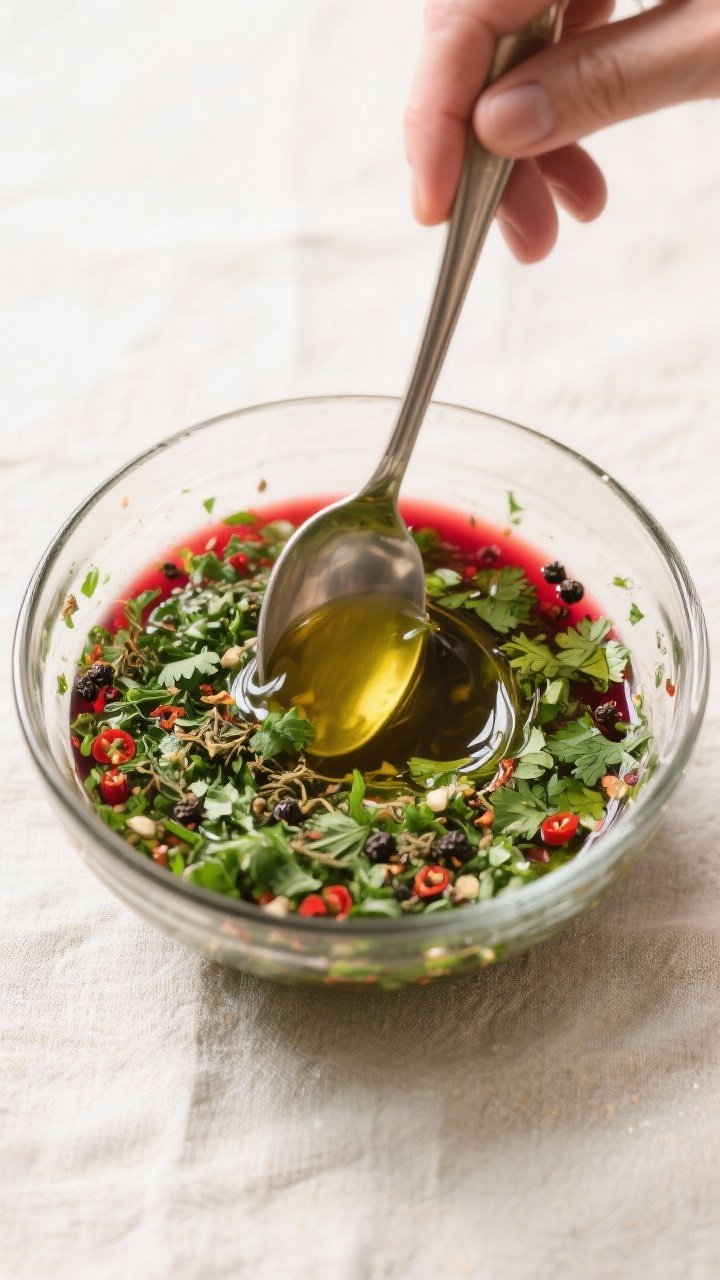
- Prep the herbs. Wash and dry the parsley and cilantro very well.
Strip the leaves and tender stems. Finely chop by hand until you have about 1 packed cup of parsley and 1/2 cup of cilantro.
- Mince the aromatics. Finely mince the garlic. If using a shallot or green onion, mince that too.
Aim for tiny pieces so they blend smoothly into the sauce.
- Build the base. In a bowl, combine the parsley, cilantro, garlic, and optional shallot. Add 1 teaspoon dried oregano, 1/2 teaspoon red pepper flakes, 1/2 teaspoon black pepper, and 1 teaspoon kosher salt to start.
- Add acidity. Stir in 2 tablespoons red wine vinegar and 1 tablespoon fresh lemon juice. Add a small pinch of lemon zest for a bright lift.
- Stream in the oil. Pour in 1/2 cup extra-virgin olive oil while stirring to emulsify slightly.
The mixture should look loose and glossy, not pasty.
- Taste and adjust. Add more salt, pepper, acid, or chili to taste. You’re aiming for a lively, balanced flavor where herbs and tang lead, and garlic and heat follow.
- Let it rest. Cover and let the chimichurri sit for at least 15–30 minutes at room temperature so the flavors meld. Stir before serving.
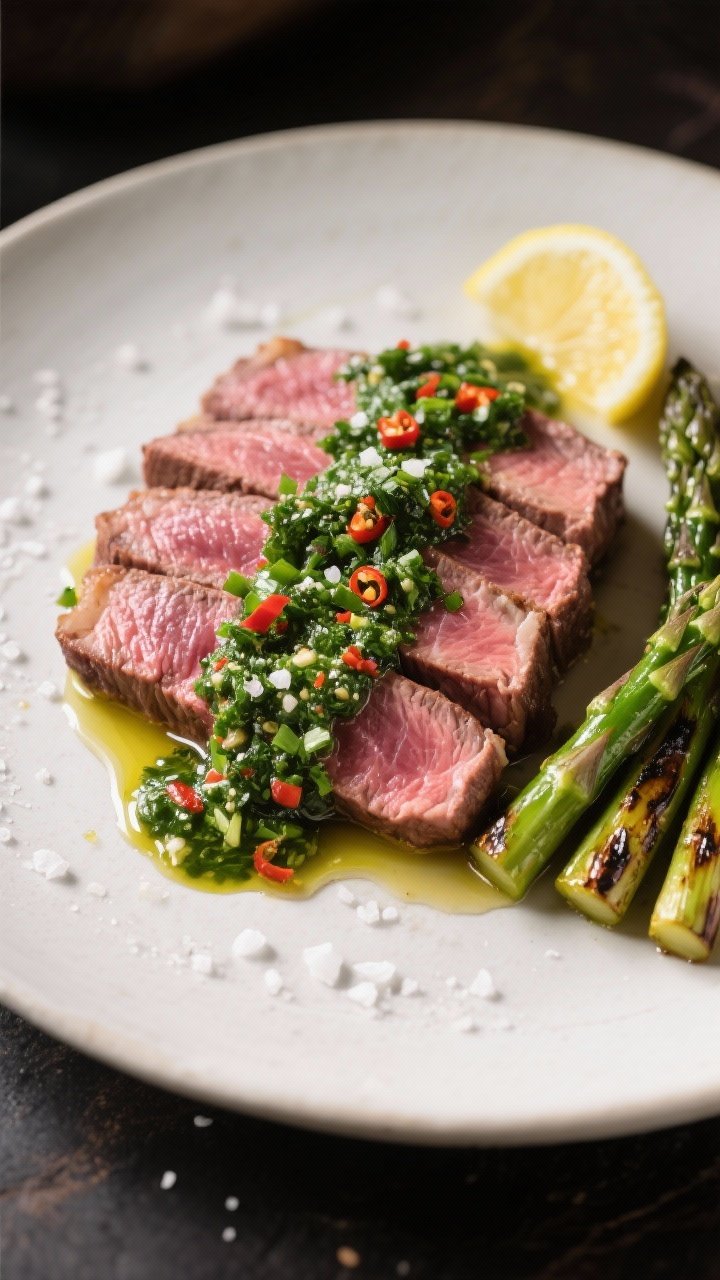
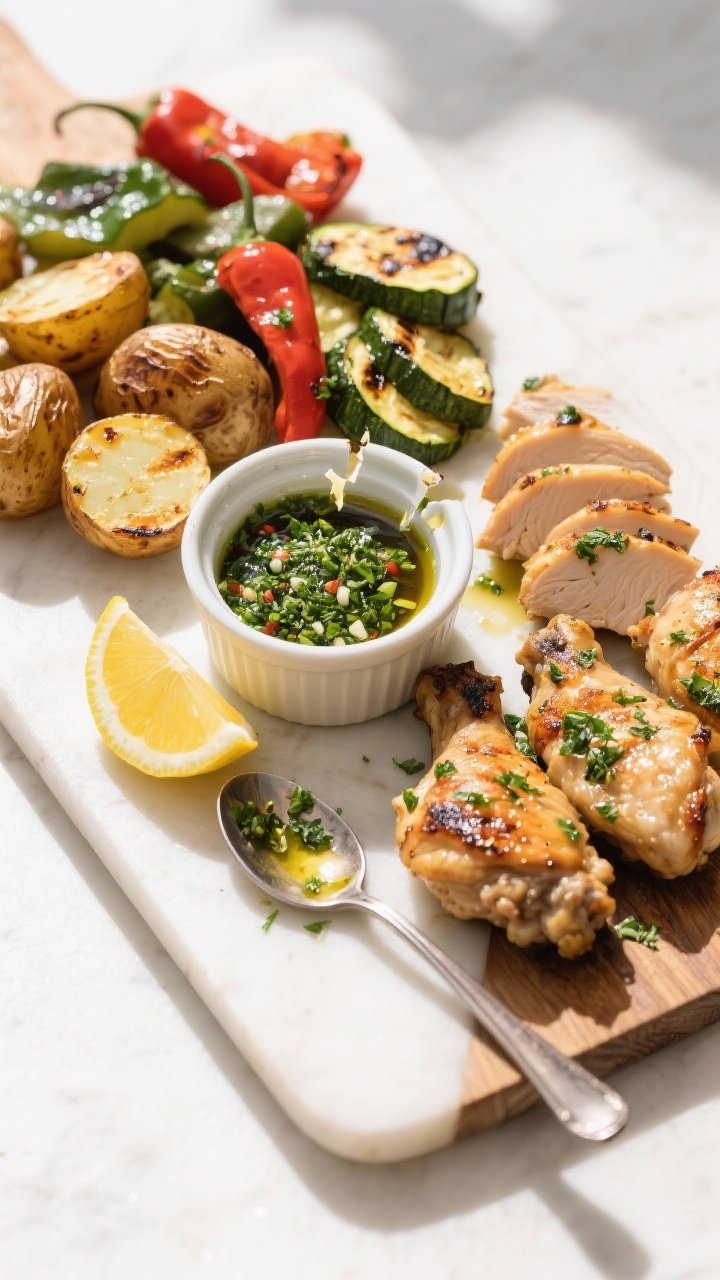
- Serve generously. Spoon over grilled steak, chicken, fish, roasted potatoes, charred vegetables, or use as a marinade.
Storage Instructions
Transfer the chimichurri to a clean jar and press a thin layer of olive oil on top to limit air exposure.
Refrigerate for up to 5 days. The flavor improves on day two; just bring it to room temp and stir before using. For longer storage, freeze in small portions (ice cube tray works great) for up to 2 months.
Add a fresh squeeze of lemon after thawing to brighten it back up.
Benefits of This Recipe
- Fast and no-cook: From chopping board to table in minutes.
- Versatile: Works as a sauce, marinade, or dressing base.
- Meal-prep friendly: Keeps well and tastes better over time.
- Fresh and light: Herbs, acid, and olive oil add flavor without heaviness.
- Customizable heat: Make it mild or fiery to suit your crowd.
Pitfalls to Watch Out For
- Over-processing: Blending in a food processor can turn it into a paste. Hand-chopping keeps texture and prevents bitterness.
- Watery herbs: Not drying herbs well dilutes the sauce. Pat them dry before chopping.
- Too much garlic: Raw garlic intensifies over time.
Start modestly; you can always add more.
- Flat flavor: If it tastes dull, it needs salt or acid. Adjust before adding more oil.
- Old olive oil: Stale oil will ruin the sauce. Use fresh, good-quality extra-virgin olive oil.
Alternatives
- No cilantro: Use all parsley or add a little fresh oregano or mint for variety.
- Milder version: Cut the garlic in half and use less chili; add a pinch of sugar to soften the edges.
- Smoky twist: Add 1/4 teaspoon smoked paprika or a charred fresh chili.
- Citrus-forward: Swap some vinegar for extra lemon or a splash of orange juice.
- Shallot-heavy: Add finely minced shallot and let it sit in the vinegar for 10 minutes before mixing to mellow the bite.
- Alternative oils: If you prefer a lighter flavor, cut the olive oil with a neutral oil (like grapeseed) by half.
FAQ
Is chimichurri the same as pesto?
No.
Pesto typically uses basil, nuts, and cheese, and it’s thicker. Chimichurri is herb-based but lighter, with vinegar, olive oil, and no nuts or cheese. It’s designed to be spooned rather than spread.
Can I make it in a food processor?
You can pulse it quickly, but avoid blending until smooth.
Use short pulses and stop while the herbs still have texture. Over-blending can make the sauce bitter and pasty.
What meats pair best with chimichurri?
It’s classic with grilled steak, especially skirt or flank. It’s also great with chicken thighs, pork tenderloin, lamb, and firm fish like swordfish or salmon.
Don’t miss it with grilled vegetables and potatoes.
How do I use it as a marinade?
Reserve some chimichurri for serving. Then thin the remainder with extra oil and vinegar, and marinate meat for 30 minutes to 2 hours (less for fish). Pat the surface dry before cooking to encourage browning.
Can I make it less acidic?
Yes.
Reduce the vinegar, add more olive oil, and balance with a small pinch of sugar or a splash of orange juice. Taste and tweak until it feels round and smooth.
What if I don’t like cilantro?
Skip it and use all parsley. You can also add a bit of fresh oregano or mint to keep things interesting without the cilantro flavor.
How spicy should it be?
That’s up to you.
Start with a pinch of red pepper flakes for warmth. If you like heat, add more flakes or a finely minced fresh chili.
Why does my chimichurri taste bitter?
Likely causes are over-processing, old olive oil, or too much lemon zest. Chop by hand, use fresh oil, and keep zest light.
A pinch of salt and a little extra vinegar can correct minor bitterness.
Wrapping Up
Chimichurri is a small effort with a big payoff. Keep a jar in the fridge, and weeknight meals instantly taste more exciting. It’s flexible, fresh, and easy to tailor to your taste.
Once you make it a few times, you’ll find your own perfect balance and use it on almost everything.
Ingredients
Method
- Prep the herbs. Wash and dry the parsley and cilantro very well. Strip the leaves and tender stems. Finely chop by hand until you have about 1 packed cup of parsley and 1/2 cup of cilantro.
- Mince the aromatics. Finely mince the garlic. If using a shallot or green onion, mince that too. Aim for tiny pieces so they blend smoothly into the sauce.
- Build the base. In a bowl, combine the parsley, cilantro, garlic, and optional shallot. Add 1 teaspoon dried oregano, 1/2 teaspoon red pepper flakes, 1/2 teaspoon black pepper, and 1 teaspoon kosher salt to start.
- Add acidity. Stir in 2 tablespoons red wine vinegar and 1 tablespoon fresh lemon juice. Add a small pinch of lemon zest for a bright lift.
- Stream in the oil. Pour in 1/2 cup extra-virgin olive oil while stirring to emulsify slightly. The mixture should look loose and glossy, not pasty.
- Taste and adjust. Add more salt, pepper, acid, or chili to taste. You’re aiming for a lively, balanced flavor where herbs and tang lead, and garlic and heat follow.
- Let it rest. Cover and let the chimichurri sit for at least 15–30 minutes at room temperature so the flavors meld. Stir before serving.
- Serve generously. Spoon over grilled steak, chicken, fish, roasted potatoes, charred vegetables, or use as a marinade.
Printable Recipe Card
Want just the essential recipe details without scrolling through the article? Get our printable recipe card with just the ingredients and instructions.