Air Fryer Lotus Root Chips – Crispy, Light, and Surprisingly Simple
If you love crunchy snacks with a little personality, lotus root chips are a winner. They’re crisp, beautiful, and surprisingly easy to make at home—especially in an air fryer. You’ll get that satisfying crunch without deep-frying or a long cleanup.
The mild, slightly nutty flavor plays well with all kinds of seasonings, from simple salt to spicy chili. Once you try them, you might find yourself keeping lotus root on your regular grocery list.
Why This Recipe Works
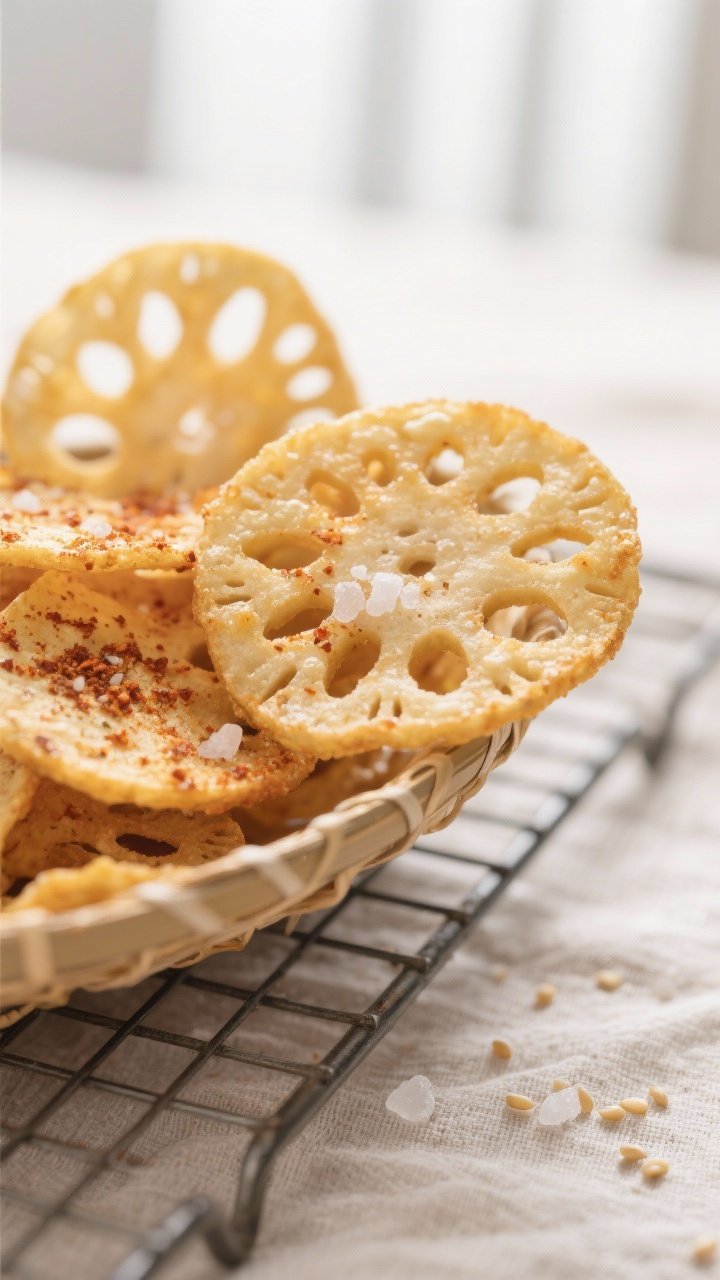
Air fryers excel at creating crisp textures using minimal oil. Lotus root, with its sturdy structure and signature holes, becomes perfectly crunchy while staying light.
Thin slices cook quickly and evenly, so you don’t need a long soak in hot oil or advanced knife skills. A brief soak in water removes excess starch, which helps the chips crisp instead of turning leathery. With a few pantry spices, you get a snack that looks gourmet but feels effortless.
What You’ll Need
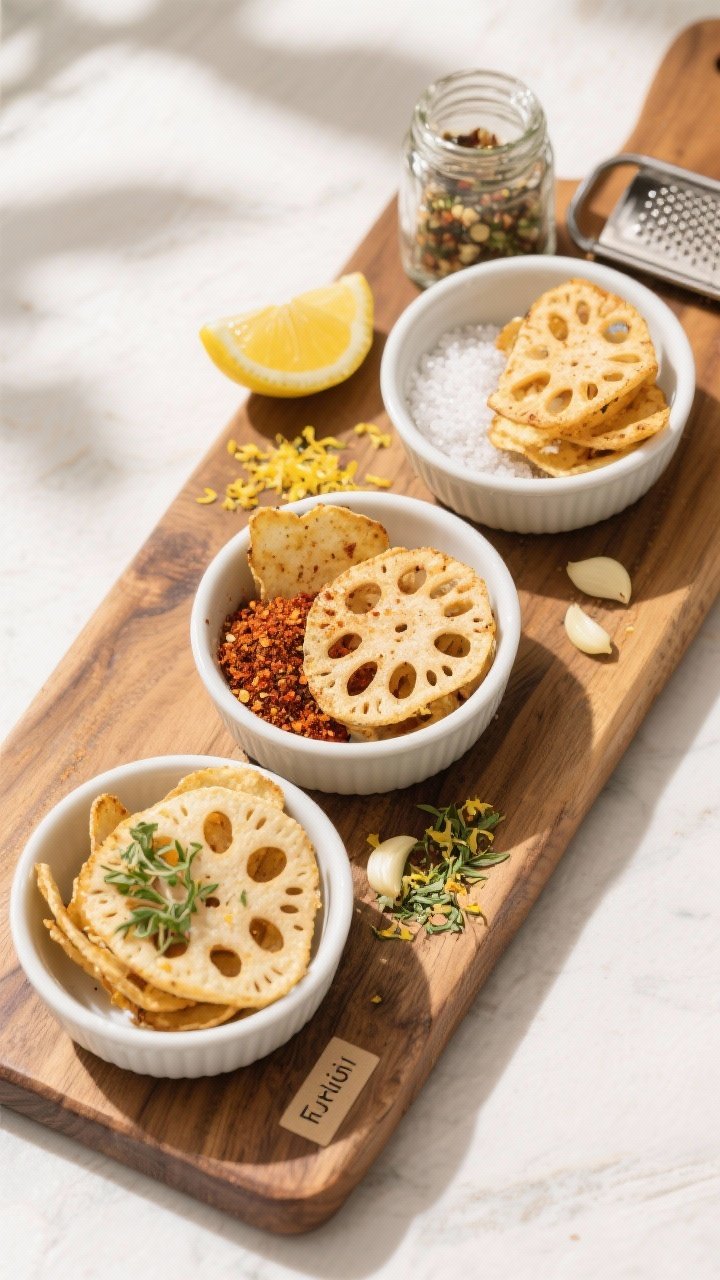
- Fresh lotus root: Look for firm, heavy pieces with smooth skin and no soft spots.
- Neutral oil: Avocado, canola, or grapeseed oil for light coating.
- Salt: Fine or flaky, to taste.
- Black pepper: Freshly ground for a subtle kick.
- Garlic powder: Optional, for savory depth.
- Paprika or chili powder: Optional, for color and heat.
- Rice vinegar or lemon juice: Optional, a splash brightens the flavor.
- Sesame seeds or furikake: Optional toppings for a Japanese-inspired twist.
- Equipment: Air fryer, mandoline or sharp knife, bowl, paper towels, and a mixing bowl.
Instructions
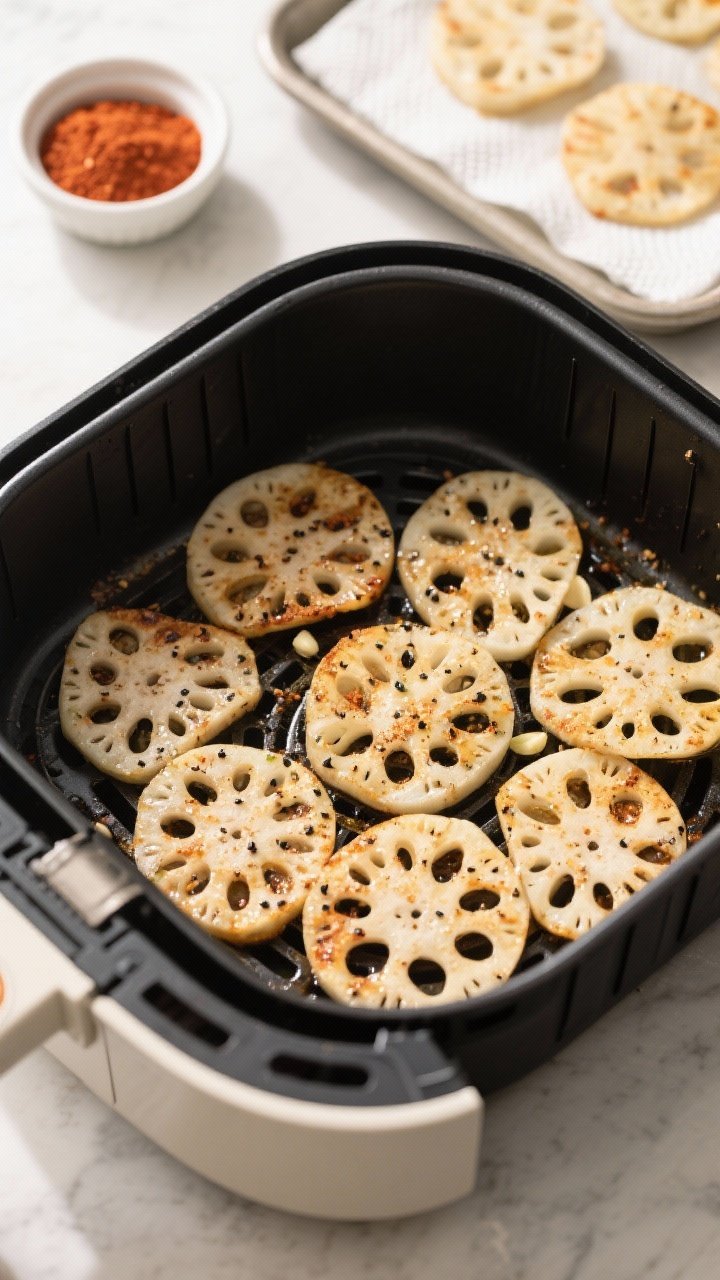
- Prep the lotus root: Peel the lotus root with a vegetable peeler.
Rinse to remove any dirt lodged in the holes.
- Slice thinly: Use a mandoline (recommended) to slice into 1/16- to 1/8-inch rounds. Thin, even slices yield the crispiest chips.
- Soak briefly: Place slices in a bowl of cold water for 10–15 minutes. This reduces surface starch for better crisping.
- Dry well: Drain and pat the slices thoroughly dry with paper towels.
Excess moisture leads to steaming, not crisping.
- Season: In a mixing bowl, toss slices with 1–2 teaspoons of oil, a pinch of salt, pepper, and your chosen spices. Add a few drops of rice vinegar or lemon juice if using.
- Preheat the air fryer: Set to 350°F (175°C) for 3 minutes. A warm basket helps prevent sticking.
- Arrange in a single layer: Place slices in the basket without overlapping.
Work in batches to avoid crowding.
- Air fry: Cook for 8–12 minutes, shaking or flipping halfway. Watch closely during the last 2–3 minutes—edges should turn golden and crisp.
- Finish and season: Transfer to a rack or paper towel. Sprinkle with a touch more salt or your favorite finishing seasoning while hot.
- Repeat: Continue with remaining batches.
Serve warm or at room temperature.
Storage Instructions
Let chips cool completely before storing. Warm chips trap steam, which softens them. Store in an airtight container at room temperature for up to 3 days.
If they lose crispness, re-crisp in the air fryer at 300°F (150°C) for 2–3 minutes. Avoid the fridge—it adds moisture and dulls the texture.
Benefits of This Recipe
- Lighter than deep-fried chips: Minimal oil with maximum crunch.
- Fast and flexible: Slices cook in minutes, and you can tweak the seasoning to match your mood.
- Nutrient-rich: Lotus root is a good source of fiber, vitamin C, and minerals like potassium.
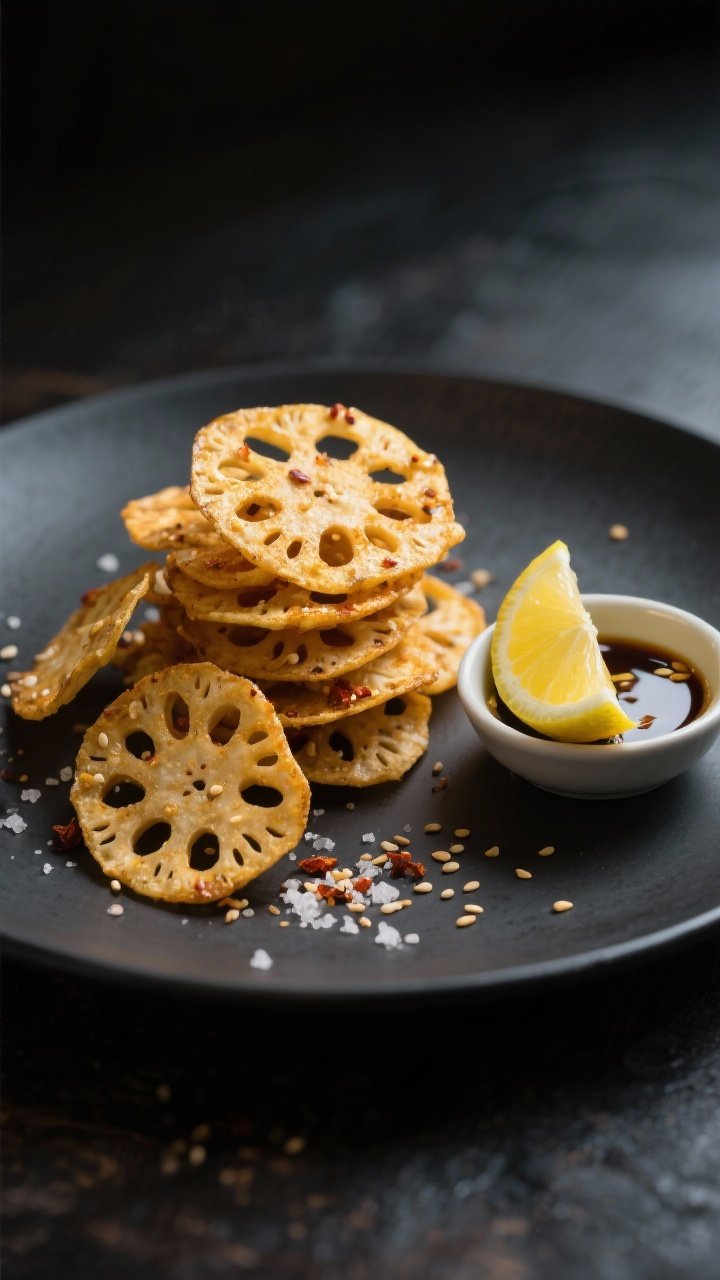
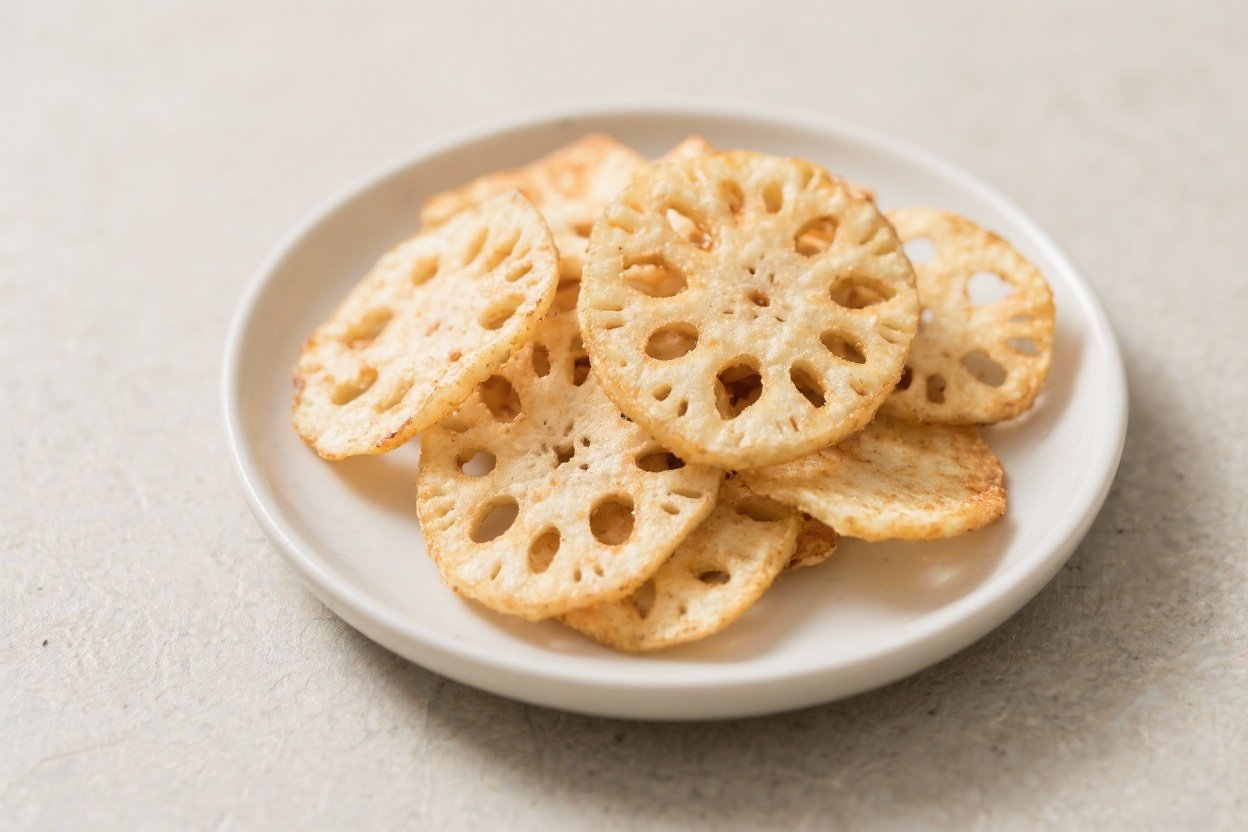
- Visually striking: The lace-like holes make them beautiful for parties and snack boards.
- Budget-friendly: Simple ingredients, and a small amount of lotus root goes a long way.
Pitfalls to Watch Out For
- Slicing too thick: Thick slices tend to turn tough or chewy. Keep them thin and even.
- Skipping the soak: Excess starch prevents crisping.
A short soak makes a big difference.
- Overcrowding the basket: Overlapping leads to steaming and uneven browning. Cook in batches.
- Too much oil: A light coating is enough. Too much oil can make chips greasy and cause uneven browning.
- Not watching the last few minutes: They can jump from perfect to overdone quickly.
Keep an eye on color and edges.
Variations You Can Try
- Sea salt and vinegar: Toss hot chips with a sprinkle of sea salt and a mist of malt vinegar.
- Sesame and soy: Dust with toasted sesame seeds and a light spray of soy sauce or tamari.
- Spicy togarashi: Sprinkle with shichimi togarashi for citrusy heat and sesame crunch.
- Smoky paprika: Add smoked paprika and a pinch of garlic powder for a barbecue vibe.
- Herb and lemon: Finish with lemon zest and finely chopped parsley for freshness.
- Sweet-savory: Lightly dust with brown sugar, chili powder, and a pinch of salt for a sweet heat combo.
FAQ
Where can I buy lotus root?
Look for it at Asian grocery stores, well-stocked produce markets, or international sections of larger supermarkets. It’s often sold fresh near other specialty vegetables. You can also find it vacuum-packed or frozen, though fresh gives the best texture for chips.
Do I have to peel the lotus root?
Peeling is recommended because the skin can be tough and slightly bitter.
It also helps remove any residual dirt on the surface and between the holes.
Can I use frozen lotus root slices?
Yes, but thaw them fully and pat very dry. Frozen slices are often thicker, so you may need to air fry a bit longer and watch closely to prevent burning.
How thin should I slice the lotus root?
Aim for 1/16– to 1/8-inch thick. Consistent thickness is more important than being ultra-thin.
A mandoline gives the most even results.
Why are my chips chewy instead of crispy?
They were likely sliced too thick, not dried well, or cooked in an overcrowded basket. Reduce moisture, slice thinner, and cook in single layers for best results.
What dipping sauces go well with these chips?
Try a quick dip of mayo mixed with sriracha and lime, ponzu with a touch of sesame oil, or yogurt with garlic and lemon. Keep dips light to complement the delicate flavor.
Can I bake these instead of air frying?
Yes.
Bake at 375°F (190°C) on a parchment-lined sheet in a single layer for 12–18 minutes, flipping once. Watch closely to prevent burning at the edges.
Are lotus root chips gluten-free?
They are naturally gluten-free. Just ensure any seasonings or sauces you use, like soy sauce, are labeled gluten-free.
How do I keep them crispy for a party?
Store in an airtight container with a small packet of food-safe desiccant if you have one, and re-crisp in the air fryer right before serving.
Serve on a platter lined with paper towels to absorb excess oil.
Can I double the recipe?
Absolutely, but cook in batches to avoid crowding. Keep finished chips warm and crisp in a low oven (around 200°F/95°C) while you finish the rest.
In Conclusion
Air Fryer Lotus Root Chips deliver an eye-catching, crunchy snack with minimal effort. With a quick soak, thin slices, and a few simple seasonings, you get a light, flavorful chip that pairs with just about any dip or topping.
They’re versatile, fast, and far less oily than deep-fried versions. Once you make a batch, you’ll see why this simple method deserves a spot in your snack rotation.
Ingredients
Method
- Prep the lotus root: Peel the lotus root with a vegetable peeler. Rinse to remove any dirt lodged in the holes.
- Slice thinly: Use a mandoline (recommended) to slice into 1/16- to 1/8-inch rounds. Thin, even slices yield the crispiest chips.
- Soak briefly: Place slices in a bowl of cold water for 10–15 minutes. This reduces surface starch for better crisping.
- Dry well: Drain and pat the slices thoroughly dry with paper towels. Excess moisture leads to steaming, not crisping.
- Season: In a mixing bowl, toss slices with 1–2 teaspoons of oil, a pinch of salt, pepper, and your chosen spices. Add a few drops of rice vinegar or lemon juice if using.
- Preheat the air fryer: Set to 350°F (175°C) for 3 minutes. A warm basket helps prevent sticking.
- Arrange in a single layer: Place slices in the basket without overlapping. Work in batches to avoid crowding.
- Air fry: Cook for 8–12 minutes, shaking or flipping halfway. Watch closely during the last 2–3 minutes—edges should turn golden and crisp.
- Finish and season: Transfer to a rack or paper towel. Sprinkle with a touch more salt or your favorite finishing seasoning while hot.
- Repeat: Continue with remaining batches. Serve warm or at room temperature.
Printable Recipe Card
Want just the essential recipe details without scrolling through the article? Get our printable recipe card with just the ingredients and instructions.